All use cases

AI product comparison that ends the tab-hopping

Nobody compares products on one site. They open yours, open two competitors, and buy wherever the difference is easiest to work out. A compare table does not settle it — it hands the shopper two spec sheets and asks them to do the reasoning themselves.

Two whiskies, near-identical price → the differences, then a pick.

The problem

Two items, similar price, and the page will not say which one to pick. Most stores answer this with a compare page: a grid of attributes side by side. It is honest, and it is still homework — the shopper has to know which attributes matter before the table means anything.

On a fashion or lifestyle catalog it is worse, because the differentiating detail lives in a paragraph of marketing copy rather than in a filterable attribute. The shopper reads both descriptions, learns nothing decisive, and leaves to go and read a review site instead.

How WisWes handles it

WisWes answers the comparison the way a good shop assistant would. It reads both products from your live catalog — attributes, descriptions, price, stock — and replies with the trade-off in a sentence: this one for colder days, that one for a lighter layer.

It ends on a decision, not a table. The shopper can ask a follow-up in the same breath — “does the warmer one come in navy?” — and add the right item to the cart without leaving the conversation.

What you get

  • Compares any two or more products from your live catalog, on request
  • Lays the differences out as a table — one row per feature that actually differs
  • Explains the difference that matters instead of listing every attribute
  • Reads free-text descriptions, so it works even when the difference is not a filterable attribute
  • Recommends one, with the reason — and says when it is genuinely a toss-up
  • Carries straight on into size, stock and add-to-cart in the same chat
  • Works alongside your existing compare page rather than replacing it
What the shopper actually does

your-store.com/catalog/product_compare
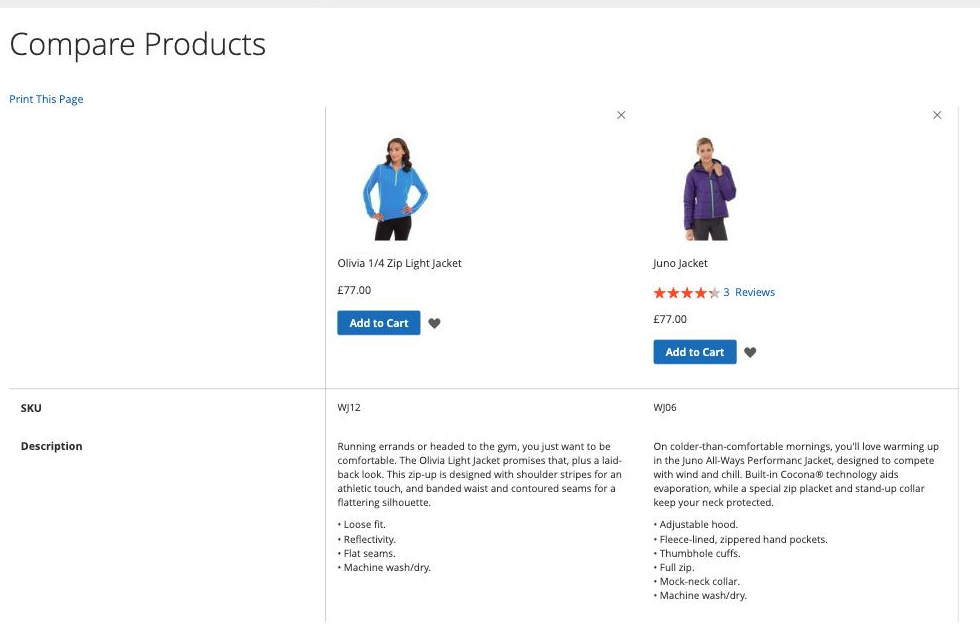
What a compare page gives the shopper: a SKU and two paragraphs of marketing copy. Both jackets £77 — it never says which one to buy.
your-store.com/liquor
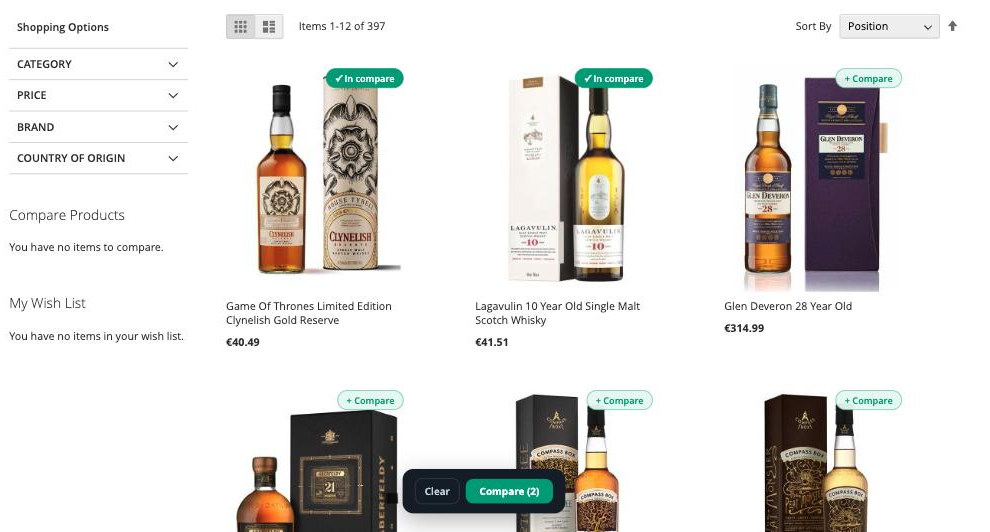
A “+ Compare” control on each tile. The shopper marks two whiskies at £40.49 and £41.51, and a bar appears to send them straight into the chat — no separate compare page.
your-store.com
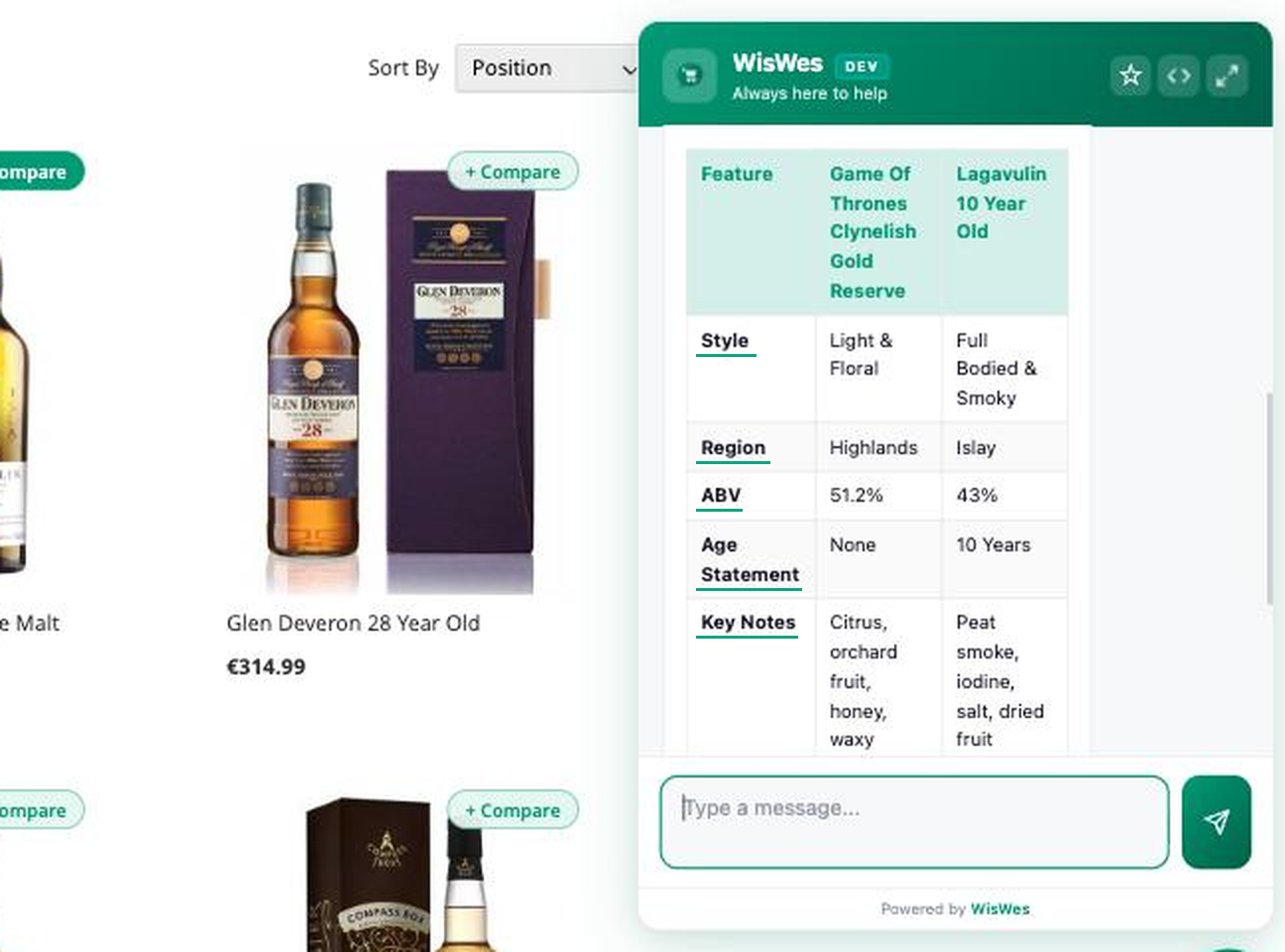
The same two products, asked from that bar. WisWes answers in the chat window with a table — style, region, ABV, age statement, tasting notes — one row per feature that actually differs, then recommends one and says why. Underlining ours.

Frequently asked questions

How is this different from my store’s compare page?

A compare page puts attributes side by side and leaves the reasoning to the shopper. WisWes reads the same data and answers the actual question — which one should I buy, and why. It also works on differences that only exist in the product description, which a compare table cannot show.

Does the shopper have to add products to a compare list first?

No. They can just name two products in the chat, or ask “what is the difference between these?” after browsing. If your store already has a compare list, WisWes can work from that too.

Will it just recommend the more expensive one?

No. It recommends on fit for the stated need. In our own Magento demo, asked to choose between two jackets at the same price, it recommends the lighter one for everyday wear and the technical one for cold and wind — and says so plainly.

What if the two products are genuinely equivalent?

It says so. Inventing a difference to force a decision is how you get a return, so WisWes will tell the shopper the choice comes down to preference and help on the axis they actually care about.

Put this to work on your store.

Start a 14-day free trial of WisWes — no credit card, cancel anytime. Or see the plans first.